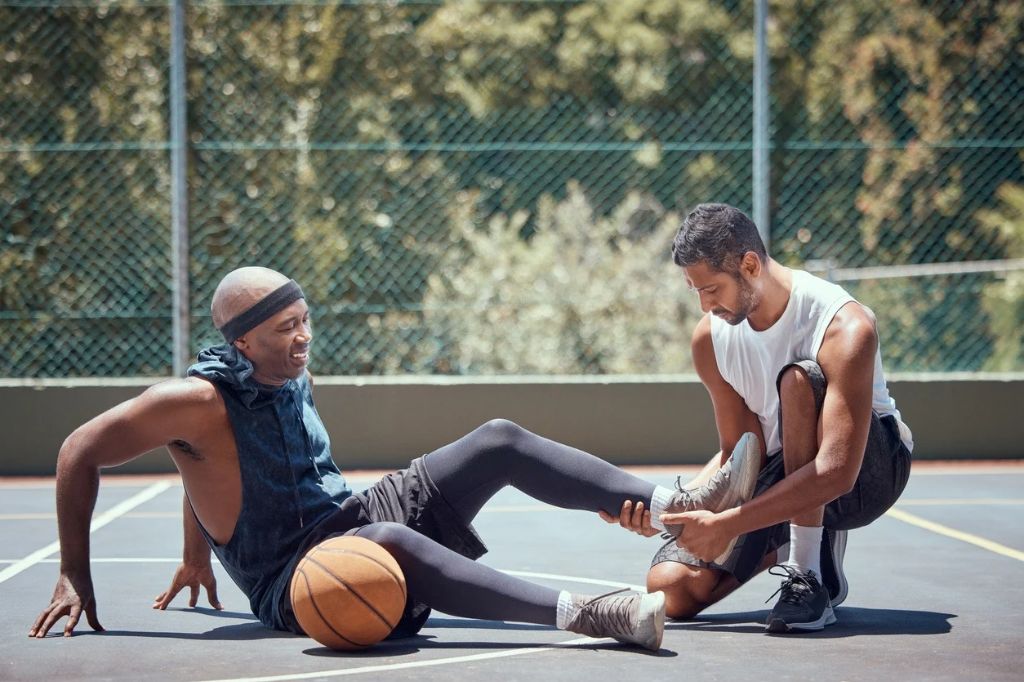
Every pickup game on a South Florida court packs dozens of hard stops, quick cuts, and crowded landings into an hour of play. That mix of speed and contact makes the sport fun, and it also explains why basketball injuries send so many players, from high school athletes to weekend warriors, to an orthopedic office each year. Fortunately, most of these injuries follow predictable patterns you can learn to guard against.
Why Is Basketball So Hard on Your Body?
Basketball asks your joints to absorb force from nearly every direction in a single possession. Two factors drive most of that risk for players at every level.
Jumping, Landing, and Cutting Add Up
A single rebound can send several times your body weight through your knees and ankles when you land. Rebounding is the most common activity linked to ankle injuries in college basketball, often because a player comes down on someone else’s foot. That makes the crowded space under the basket the place where your footwork matters most.
Old Injuries Raise Your Risk
Recreational players with a past ankle injury are almost five times more likely to hurt an ankle again. A sprain can weaken proprioception, which is your body’s sense of where your joints are in space. When that sense is dulled, your ankle reacts a split second too late, so an injury that never fully healed sets the stage for the next one.
What Are the Most Common Basketball Injuries?
Most basketball injuries strike the lower body, although the hands take their share of punishment too. These four conditions account for a large portion of the players orthopedic specialists see each season.
Ankle Sprains
Ankle sprains and overuse knee injuries tied as the most common problems in a study that followed players through a full season, each making up about 14.8% of injuries. If you play regularly, your odds of rolling an ankle at some point are high. Most are lateral ankle sprains, meaning the ligaments on the outside of the ankle stretch or tear as the foot rolls inward. Our guide on when to worry about a sprained ankle can help you judge how serious yours is.
Jumper’s Knee and Other Overuse Knee Pain
Repeated jumping places steady stress on the patellar tendon, which connects your kneecap to your shinbone. Over months of play, this can lead to patellar tendinopathy, better known as jumper’s knee. Because the pain below the kneecap builds gradually, many athletes ignore it until jumping becomes too painful, and early rest shortens recovery considerably.
ACL Tears
The anterior cruciate ligament, or ACL, keeps your shinbone from sliding forward under your thighbone. It usually tears without contact, when a player plants a foot to change direction or lands with the knee caving inward. Knowing the key signs of an ACL tear, such as a pop followed by fast swelling, helps you get care before an unstable knee damages its cartilage. Among college players, internal knee injuries like this one are the most common reason athletes sit out for more than 10 days.
Jammed Fingers and Mallet Finger
A ball that strikes an outstretched fingertip can injure the extensor tendon, the cord that straightens your fingertip. When that tendon pulls loose, the tip droops and will not straighten on its own, a condition called mallet finger. Most cases heal well with several weeks in a splint, provided treatment starts early, so a finger that stays crooked deserves a visit with a hand specialist.
How Can You Prevent Basketball Injuries?
You cannot control every collision, but you can control how prepared your body is for the game. Prevention comes down to smart training, the right gear, and enough recovery time.
Train Your Body to Move Safely
Neuromuscular training teaches your muscles and nerves to work together so you land and pivot with better control. Athletes who stick with neuromuscular training programs have far lower rates of ACL injury than those who follow them only now and then, so consistency matters as much as the exercises. A simple routine before you play might look like this:
- Warm up with five to ten minutes of light jogging, skips, and leg swings.
- Practice soft landings from small jumps with your knees lined up over your toes.
- Add balance drills on one leg to sharpen ankle control.
- Strengthen your hips, glutes, and core two or three times each week.
- Finish with controlled cutting drills that build up to game speed.
Our article on preventing ACL injuries offers more drills for athletes of all ages.
Choose the Right Shoes and Ankle Support
Poor ankle support and shoes with slick soles both raise your chance of a sprain, so replace your shoes once the tread wears smooth. If you have sprained an ankle before, ankle bracing offers the best balance of cost and protection compared with taping. For youth players, a lace-up ankle brace reduces ankle injuries by supporting a previously injured ligament during quick moves.
Respect Rest and Recovery
Overuse injuries develop when tissues take on more stress than they can repair between sessions. Playing every season without a break or cramming several tournaments into one weekend speeds up that breakdown. Plan one or two rest days each week, and treat lingering soreness as a reason to scale back.
When Should You See a Specialist for a Basketball Injury?
Many minor sprains and bruises improve with rest, ice, and time. Certain symptoms, however, point to damage that needs a professional evaluation to heal correctly.
Signs That Need Prompt Attention
Reach out to an orthopedic specialist if you notice any of the following:
- A pop at the moment of injury followed by rapid swelling
- A knee or ankle that feels loose or gives way
- Trouble bearing weight for more than a day or two
- A fingertip that droops or a finger joint that looks crooked
- Pain that returns every time you play
Getting Back on the Court Safely
Returning too soon can turn a single injury into a chronic problem. A sports medicine specialist can confirm your diagnosis, guide your rehab, and clear you to play once strength and stability return. Whether you need ankle treatment for a stubborn sprain or knee care for a torn ligament, a clear plan helps you play with confidence again.
Located in Fort Lauderdale, Orthopedic Specialty Institute serves athletes throughout South Florida, including Broward County, Palm Beach County, and Miami-Dade County. If an injury is keeping you on the bench, request an appointment and let our sports medicine team help you get back in the game.