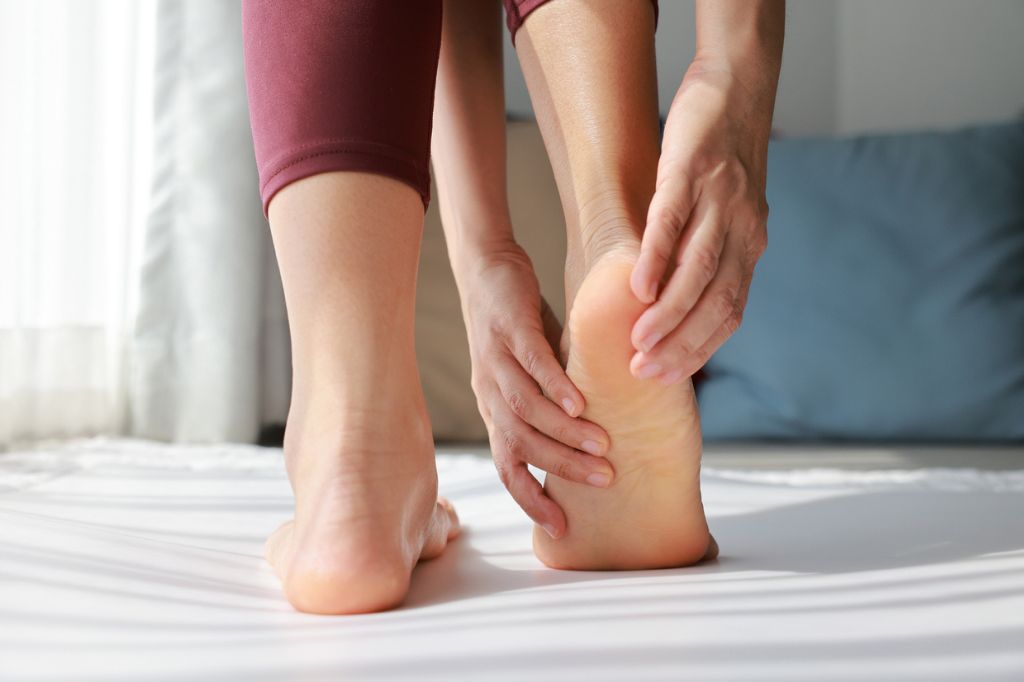
You step onto the floor in the morning, and a sharp pain shoots through the bottom of your heel. After a few minutes of shuffling around the kitchen, it fades to a dull ache. Then, after a long drive across town, the same stabbing sensation returns, as if your foot has been reset.
This pattern is so familiar that many doctors can diagnose it from the story alone. Heel pain like this is one of the most common foot complaints in the country, with about 2 million patients treated every year. Roughly 1 in 10 people will deal with it at some point, so you are far from alone.
The morning timing follows clear physical logic, and once you understand it, the pain-easing habits make sense too.
What Plantar Fasciitis Does to Your Foot
Before the morning pattern makes sense, it helps to know which structure is hurting. Most people never notice this tissue until it starts to complain.
The Band of Tissue Under Your Arch
The plantar fascia is a thick, flat band that runs along the bottom of your foot, connecting your heel bone to the base of your toes. It holds up your arch and absorbs shock each time your foot strikes the ground. Trouble begins when the daily load outpaces its ability to recover, and tiny tears form where the band attaches to the heel.
A Wear and Tear Problem
Despite the “itis” in its name, this condition behaves more like slow tissue breakdown than a typical inflammatory injury. Many specialists now call it plantar fasciopathy, meaning a degenerative change in the tissue. That matters because rest alone rarely solves it; the tissue needs gentle stretching and gradual loading to rebuild.
Why Heel Pain Peaks When You Get Out of Bed
The worst pain arrives at the most predictable moment of the day. Two things combine to make those first steps hurt, and both trace back to how your foot rests at night.
Your Foot Tightens Overnight
Most people sleep with their feet pointed slightly downward. In that position, the plantar fascia stays relaxed and shortened for hours, and the irritated fibers near your heel stiffen as they rest. Your calf muscles tighten along with it.
The First Steps Stretch Tissue That Is Not Ready
When you stand, that shortened band suddenly stretches to full length and tugs on the damaged spot at your heel. As you keep walking, the tissue warms up and loosens, which is why the pain eases. Any long stretch of sitting, whether in a car or at a desk, lets it tighten again and restarts the cycle.
Who Is Most Likely to Develop Heel Pain
Anyone can develop this heel pain, from marathon runners to people who rarely exercise. Certain factors raise the odds, and many are within your control.
Common Risk Factors
These factors place extra stress on the plantar fascia:
- Carrying extra body weight, which increases the load on your heels with every step
- Standing for long hours on hard surfaces, common among nurses, teachers, and retail workers
- Suddenly increasing your activity, such as starting a new walking or running routine
- Having flat feet or very high arches, which change how force travels through the foot
- Being between 40 and 60 years old, when the condition appears most often
Why Tight Calves Matter So Much
Among nonathletes, limited ankle dorsiflexion is the single greatest risk factor. Dorsiflexion is the ability to pull your toes up toward your shin, and tight calves restrict it. When your ankle cannot bend far enough, your foot rolls inward to compensate, and the plantar fascia absorbs the extra strain. That is why calf stretching appears in nearly every treatment plan.
How to Ease Morning Heel Pain at Home
Most cases respond well to consistent home care. A few small changes can make a noticeable difference within weeks.
Stretch Before Your Feet Touch the Floor
In one well-known trial, patients who used a stretch targeting the plantar fascia reported much less pain with their first morning steps than patients who only stretched their calves. Try this sequence while still sitting on the edge of the bed:
- Cross the painful foot over the opposite knee.
- Grab the base of your toes and gently pull them back toward your shin.
- Run your other thumb along your arch to feel the tight band underneath.
- Hold for about 10 seconds, then relax.
- Repeat 10 to 20 times before standing up.
Daily Habits That Take Pressure Off
Wear cushioned, supportive shoes, even on tile floors at home. Rolling your arch over a frozen water bottle can calm evening soreness, and swapping some walking for swimming or cycling lets the tissue recover. Some patients also benefit from a night splint, a brace that holds the foot in a gentle stretch while you sleep.
When to See a Specialist for Plantar Fasciitis
Most heel pain improves with patience, but some cases need professional care. Knowing the difference can save you months of lost activity.
Signs Home Care Is Not Enough
More than 90% of patients improve within 10 months of starting simple treatment, but that is a long time to limp through your mornings. Schedule an evaluation if your pain has not improved after several weeks of stretching, hurts even at rest, or comes with swelling, numbness, or tingling. A sudden pop followed by sharp pain can signal a tear and needs prompt attention.
What Treatment Can Look Like
A specialist will examine your foot, check your ankle motion, and order imaging only if a stress fracture or pinched nerve seems possible. From there, plantar fasciitis treatment at OSI can range from a guided program with our physical therapy team to injections or shock wave therapy for stubborn cases. Surgery is usually reserved for pain that lasts a full year despite nonsurgical care. If the pain has spread toward your ankle, our guide to chronic ankle pain may also help.
Morning heel pain is common, but it does not have to become routine. Located in Fort Lauderdale, Orthopedic Specialty Institute serves patients throughout South Florida, including Broward, Palm Beach, and Miami-Dade counties. Our specialists can pinpoint the source of your heel pain and get you moving comfortably again. Request an appointment online today.