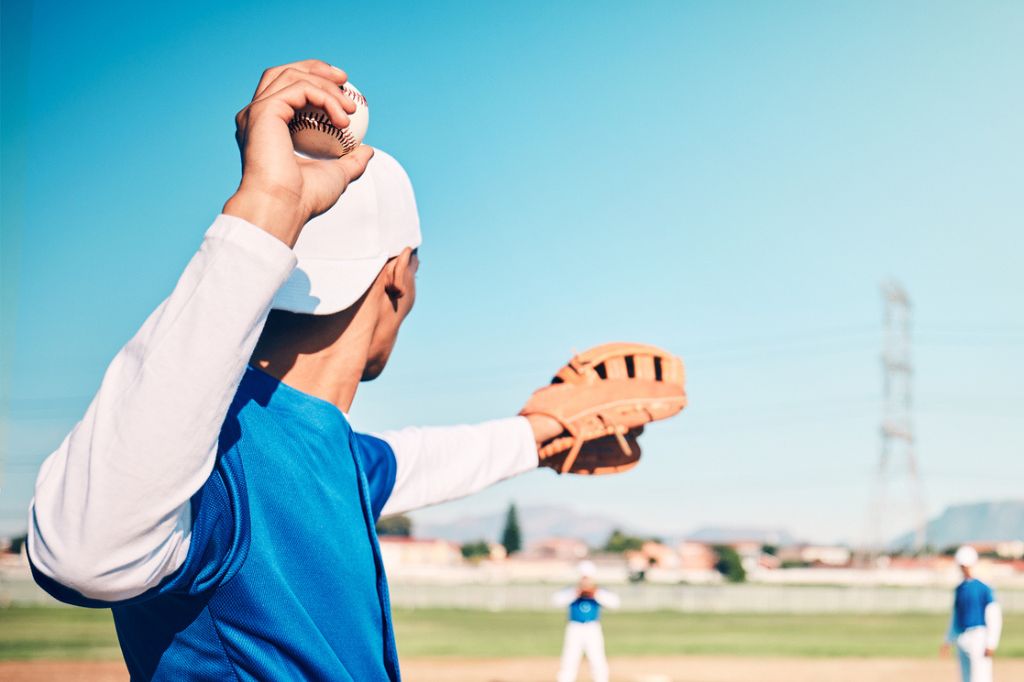
A pitcher notices his velocity slipping over a season, and by the fifth inning his arm feels heavy and sluggish. A volleyball player starts to feel a strange catch deep in her shoulder every time she swings for a kill. Neither athlete can recall a moment when something went wrong, which is exactly why a SLAP tear can be so hard to recognize early.
Athletes who throw, serve, spike, or swim push the shoulder through extreme ranges at high speed thousands of times each season. That workload places steady stress on a small ring of cartilage inside the joint, and understanding how it breaks down helps athletes, parents, and coaches spot trouble sooner.
What Is a SLAP Tear?
Before looking at how these injuries happen, it helps to know which structure is affected. The name sounds technical, but the anatomy behind it is fairly simple.
The Labrum and the Biceps Anchor
Your shoulder works like a ball resting in a shallow socket. Around the rim of that socket sits the labrum, a firm ring of cartilage that deepens the socket and keeps the ball centered. The top of the labrum also anchors one of your biceps tendons, the cord of tissue connecting the muscle on the front of your upper arm to the shoulder.
What the Letters Stand For
SLAP stands for superior labrum anterior and posterior. In plain terms, the top of the labrum has torn in an area stretching from the front to the back of the biceps anchor. Because the biceps tugs on this spot with every arm movement, damage here can weaken and destabilize the whole shoulder.
How Overhead Sports Lead to a SLAP Tear
Some labral tears happen in one violent moment, while others build over months of repeated motion. Knowing which path an athlete followed helps doctors choose the right treatment.
The Peel Back Effect During a Throw
During the late cocking phase of a throw, your arm rotates back as far as it can before whipping forward. In that position, the biceps tendon twists and pulls on the back of the labrum. Throwers experience this twisting peel-back force every time the arm cocks, so the strain quietly adds up pitch after pitch. That explains why so many athletes describe symptoms that crept in over a season rather than appearing overnight.
Tight Shoulders and Tired Shoulder Blades
Many throwers gradually lose the ability to rotate the arm inward, a condition called glenohumeral internal rotation deficit, or GIRD, which means the back of the shoulder capsule has become tight. Poor shoulder blade control, known as scapular dyskinesis, often travels alongside it. Together they change how the ball sits in the socket and intensify the peel-back force, so the injury is often a mechanics problem as much as a cartilage problem.
Sudden Trauma on the Field
A hard fall onto an outstretched arm, a forceful yank, or a shoulder dislocation can also tear the labrum in an instant. Football players, wrestlers, and weightlifters often land in this category, and they can usually point to the exact moment it happened.
Signs Your Shoulder May Have a Labral Tear
Symptoms often overlap with other problems, such as rotator cuff irritation, making them easy to brush off. Noticing specific patterns helps you describe the problem clearly to a specialist.
Common Symptoms Athletes Report
Most athletes notice a combination of the following:
- A locking, popping, catching, or grinding feeling deep inside the shoulder
- Pain when lifting overhead or holding the arm in certain positions
- A drop in throwing velocity or a “dead arm” feeling after pitching
- Weakness, or a sense that the shoulder might slip out of place
- Reduced range of motion, especially when reaching back to throw
Why an MRI Is Only Part of the Picture
Doctors often order an MRI arthrogram, an MRI taken after injecting contrast dye into the joint, to see the labrum in detail. Yet many experienced throwers show labral changes on imaging even when their shoulders feel fine, so a careful physical exam carries just as much weight as the scan.
Treatment Options and Return to Sport
Most athletes start with non-surgical care. The right path depends on your tear type, your sport, and how your shoulder responds to rehab.
Why Rehab Comes First
Nonsurgical care is the recommended first line of treatment, and surgery usually enters the conversation only after 3 to 6 months of rehab fail to help. Across five studies involving 244 athletes, roughly 54% returned to play overall, but athletes who completed their full rehab returned 78% of the time. Showing up for every session is one of the most powerful tools you control.
A typical physical therapy plan moves through these stages:
- Calm the pain with rest from throwing, anti-inflammatory medication, and sometimes a corticosteroid injection.
- Restore motion by stretching the tight back of the shoulder capsule.
- Strengthen the rotator cuff and the muscles that control the shoulder blade.
- Build core and hip strength, since much of a throw’s power starts in the legs.
- Complete a gradual interval throwing program before full competition.
When Surgery Becomes the Right Call
If pain persists, a surgeon may repair the labrum through arthroscopy, a minimally invasive procedure using a tiny camera, or release the biceps tendon. Pooled data on return to sport after SLAP repair show about 70% of patients get back to their sport, usually around nine months after surgery, though pitchers return at about 58% compared with 87% of nonpitchers. Weighing conservative and surgical options with a specialist helps you set realistic goals.
When to See a Shoulder Specialist
Mild soreness after a long practice usually settles with rest. However, certain patterns warrant an evaluation before they lead to a longer layoff.
Warning Signs That Shouldn’t Wait
Pain lasting more than two weeks despite rest is worth checking, and so is catching or locking that keeps returning. A noticeable drop in velocity, an unstable shoulder, or pain that wakes you at night all point to a problem rest alone may not solve.
What to Expect at Your Visit
A specialist will review how your symptoms started, test your strength and range of motion, and use targeted exam maneuvers to pinpoint the source of your pain. Imaging follows when needed, and together these findings shape a plan built around your sport and timeline.
Located in Fort Lauderdale, Orthopedic Specialty Institute serves patients throughout South Florida, including Broward, Palm Beach, and Miami-Dade counties. Our shoulder specialists help athletes at every level recover from labral injuries and return to the game with confidence. Request an appointment online today.